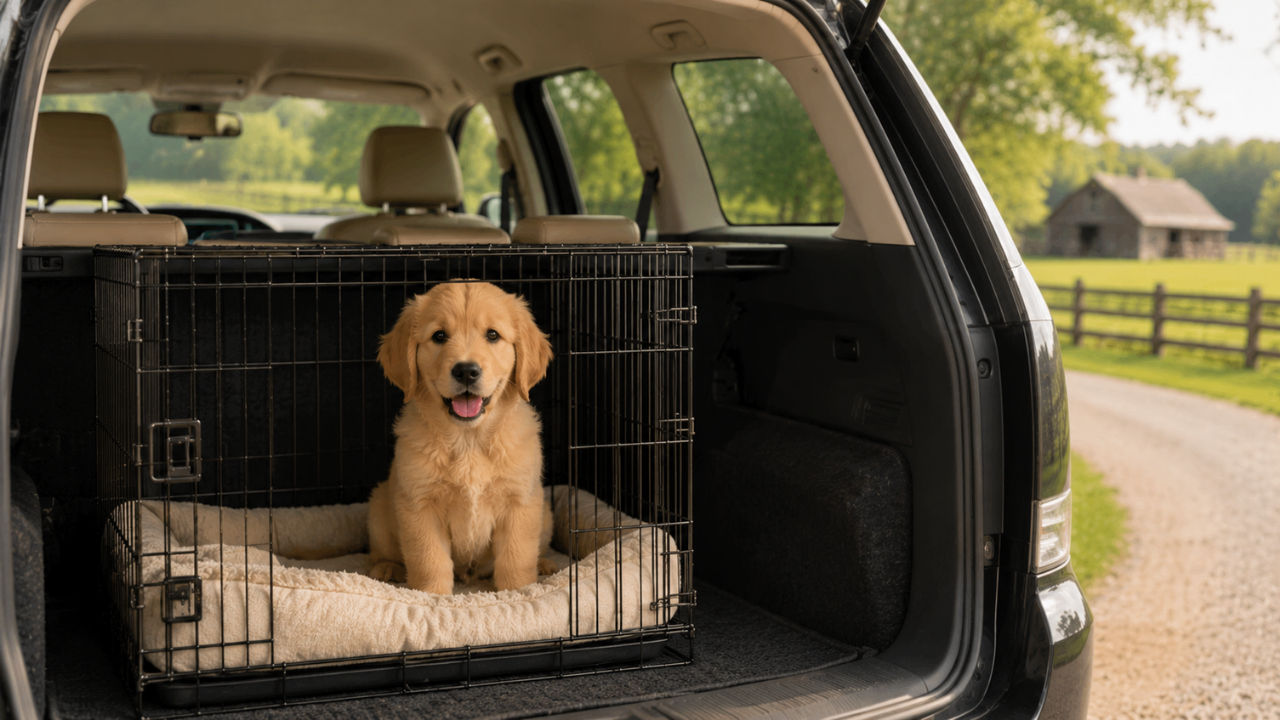
Crate: Sized appropriately (just big enough to stand, turn, and lie down). Have it set up and comfortable before thepuppy arrives — a soft blanket, a worn t-shirt that smells like you.
Puppy-proof a zone:You don’t need to puppy-proof the whole house on day one. Pick one room or areawhere the puppy will spend most of their time and make that safe — no loosecords, no toxic plants, no small objects they can swallow.
Foodand water bowls: Stainless steel or ceramic — easier to clean and morehygienic than plastic.
The right food:Ask your breeder what the puppy has been eating and buy the same food.Switching foods abruptly causes digestive upset. If you want to change foods,do it gradually over 7‒10 days.
Collar and ID tag:Have this ready before the puppy comes home. The ID tag should have your phonenumber on it from day one.
Enzymatic cleaner: You will need this foraccidents. Regular cleaners don’t break down the proteins in urine — enzymaticcleaners do, which eliminates the smell and reduces the chance of the puppy returningto the same spot.
The First 48 Hours: What to Do (and What Not to Do)
Keep it calm. The first day home is not the day to invite everyone over to meet the puppy. Let the puppy explore theirnew space quietly, at their own pace. Overwhelming them on day one creates anxiety.
Start the routine immediately. The first day sets the pattern. Feed at the same times, takethem out on the same schedule, put them in the crate at the same times. Puppies thrive on predictability.
Let them sleep. Young puppies need 16‒20 hours of sleep per day. If they’re sleeping, let them sleep. An over tired puppy is a difficult puppy.
Don’t let them havethe run of the house. For the first few weeks, the puppy should besupervised or confined. Freedom is earned through demonstrated reliability —not given on day one.
Expect some cryingat night. It’s normal. It doesn’t mean something is wrong. Follow the cratetraining guidance above and it will improve within a week.
Yes — Micro and Petite Goldendoodles typically qualify as in-cabin pets on most major airlines (under 20 lbs with carrier). Check airline rules before booking.
How long does it take for a puppy to adjust to a new home?
Most puppies show significant improvement within 3‒7 days. Full adjustment typically takes 2‒4 weeks.
Should I let my puppy sleep in my bed?
That’s a personal choice — but decide before the puppy comes home and stick to it. Consistency from day one is key.
What if my puppy won’t eat when they first come home?
It’s common to skip a meal or two due to stress. As long as they’re drinking water and seem healthy, don’t panic. If it persists past 24 hours, call your vet.