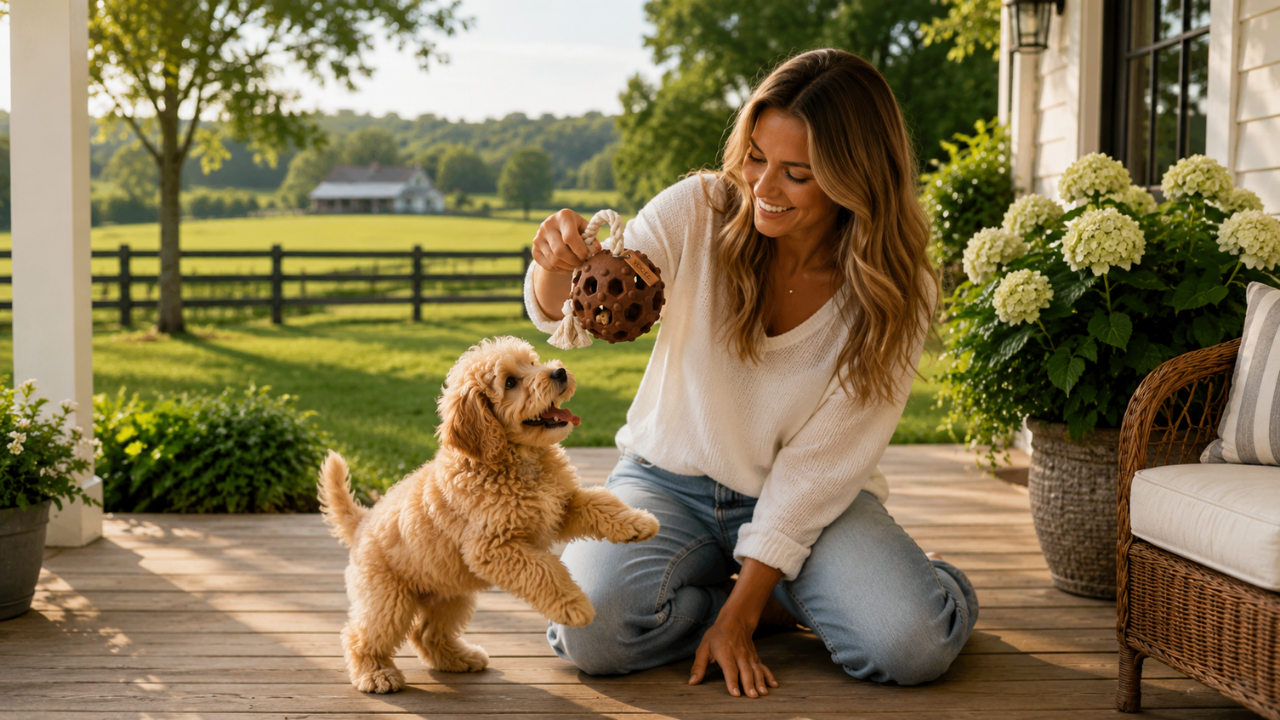
What Happens in the First 8 Weeks Shapes Everything
The first 8 weeks of a puppy’s life are the most critical developmental window they’ll ever have. What they’re exposedto, how they’re handled, and what kind of environment they grow up in directly determines how confident, calm, and adaptablethey’ll be for the
- Handling from day one: Puppies that are gently handled by humans from birth — picked up, touched, spoken to — developa comfort with human contact that lasts their entire lives. We start handling our puppies within days of birth
- Exposure to sounds, surfaces, and environments: A puppy that has only ever experienced one room in one house will be overwhelmed by the real world. We deliberately expose our puppies to different surfaces (grass, tile, carpet, gravel), sounds(traffic, appliances, children), and environments before they leave us.
- Early neurological stimulation: We use Early Neurological Stimulation (ENS) protocols — gentle exercises done during thefirst two weeks of life — that have been shown to improve cardiovascular performance, stress tolerance, and overallresilience in dogs.
- Socialization with people and other animals: Our puppies meet multiple people — adults, children, strangers — andinteract with other animals before they go home. This is non-negotiable for us.
What Most Breeders Skip (And Why It Matters)
- Most backyard breeders and puppy mills raise puppies in a single room or kennel with minimal human interaction. Thepuppies look fine at 8 weeks. The problems show up at 6 months, 12 months, 2 years — when the dog is anxious in newenvironments, reactive on leash, or terrified of strangers.
- Socialization isn’t just “being around people.” It’s structured, positive exposure to the full range of things a dog willencounter in a normal family life. It takes time and intentionality. Most breeders don’t do it because it’s a lot of work.
- A well-socialized puppy isn’t just easier to live with — it’s genuinely happier. A dog that’s confident and calm in the world hasa better quality of life. That matters to us.